
Batteries
48 V or 24 V electric pallet truck: what the higher voltage gets you
Half the current, a quarter of the cable losses, the same energy with half the Ah: what a 48 V battery means in practice and how to read V, Ah and Wh.
6 min readAuthor: AIOLOS LIFTS
The short answer
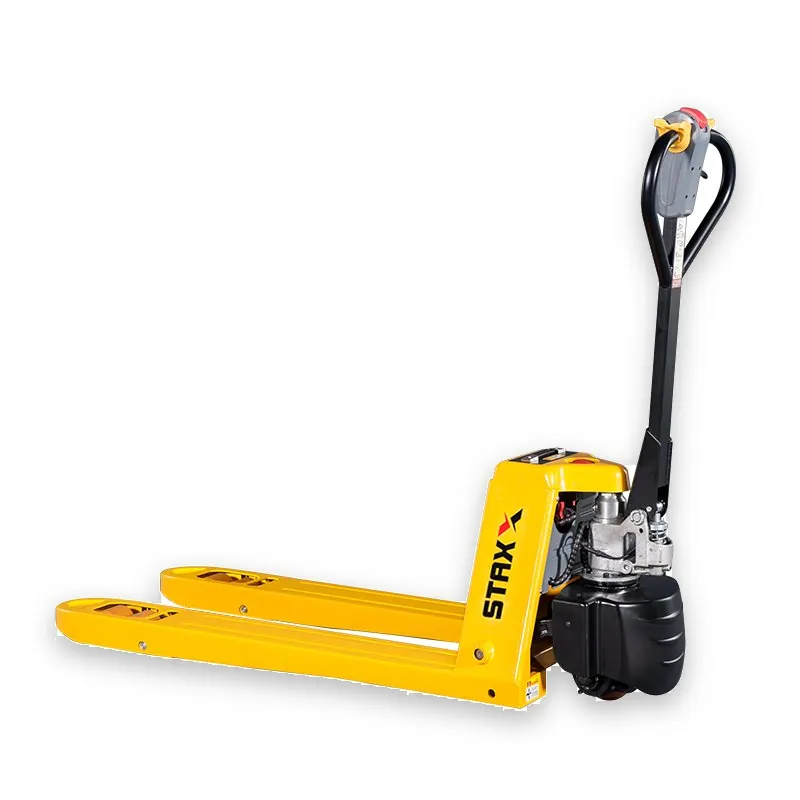
For the same power, a 48 V system draws half the current of a 24 V system, because power = voltage × current. Losses in cables, connectors and the controller grow with the square of the current, so at the same resistance they drop to a quarter at 48 V. In practice that means more efficient use of the battery, less voltage drop when the truck works loaded or on a ramp, and less heat in the wiring. Many classic 24 V trucks are also bulkier and ride on side stabiliser castors that break in potholes; the STAXX 48 V lithium trucks are built like a hand pallet truck, without them. Voltage alone, however, does not tell you the run time. Watt-hours do (Wh = V × Ah): a 48 V/10 Ah battery holds the same energy (480 Wh) as a 24 V/20 Ah one.
At a glance
| 24 V | 48 V | |
|---|---|---|
| Current for a 1.0 kW motor (I = P / V) | ≈ 42 A | ≈ 21 A |
| Cable losses at the same resistance (I² × R) | 4× | 1× (a quarter) |
| Energy of a 10 Ah battery | 240 Wh | 480 Wh |
| Energy of a 15 Ah battery | 360 Wh | 720 Wh |
| Ah needed for 480 Wh | 20 Ah | 10 Ah |
Theoretical figures from P = V × I, losses = I² × R and Wh = V × Ah. Real values depend on each truck's design. The 1.0 kW drive motor is that of the STAXX PPT20H and EPT20H (STAXX 24/7 catalogue).
Why classic 24 V trucks are bulkier
Many classic 24 V electric pallet trucks have a big, tall body. Inside sits a large battery and the motor. All that weight sits at the back, over the drive wheel.
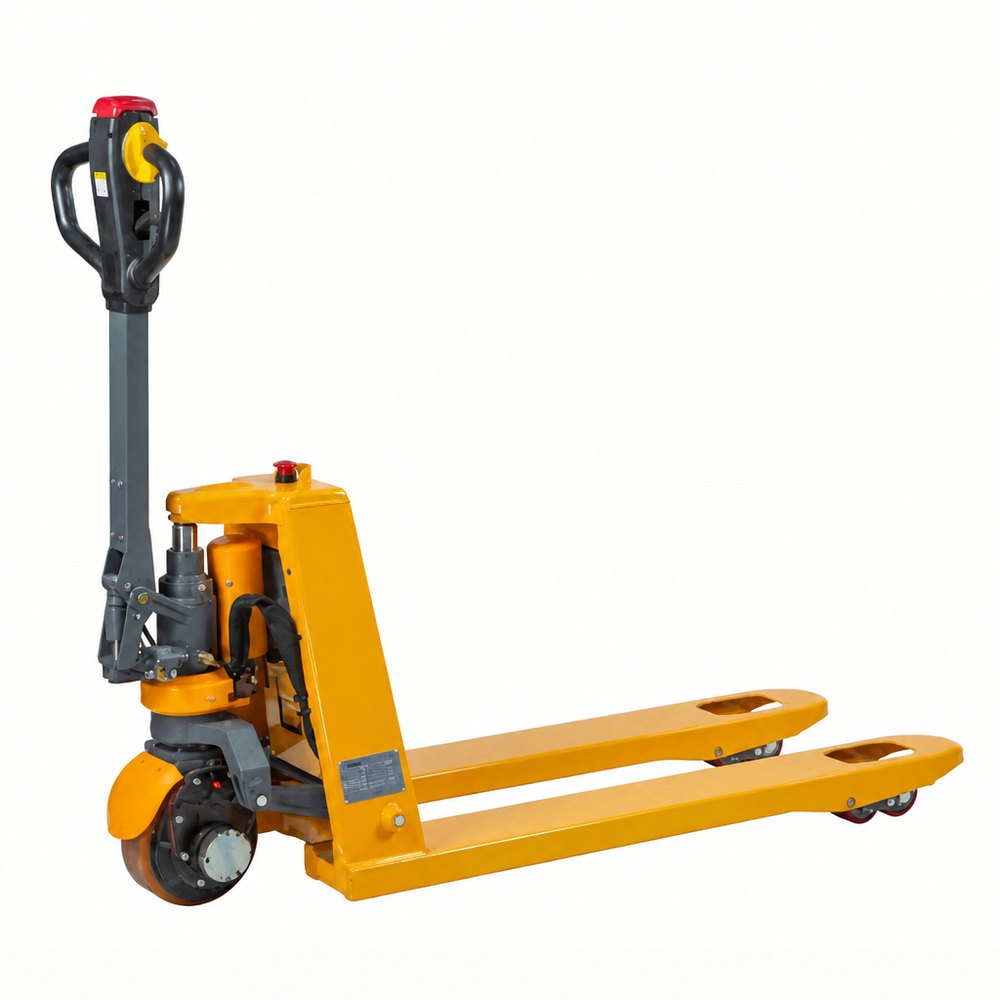
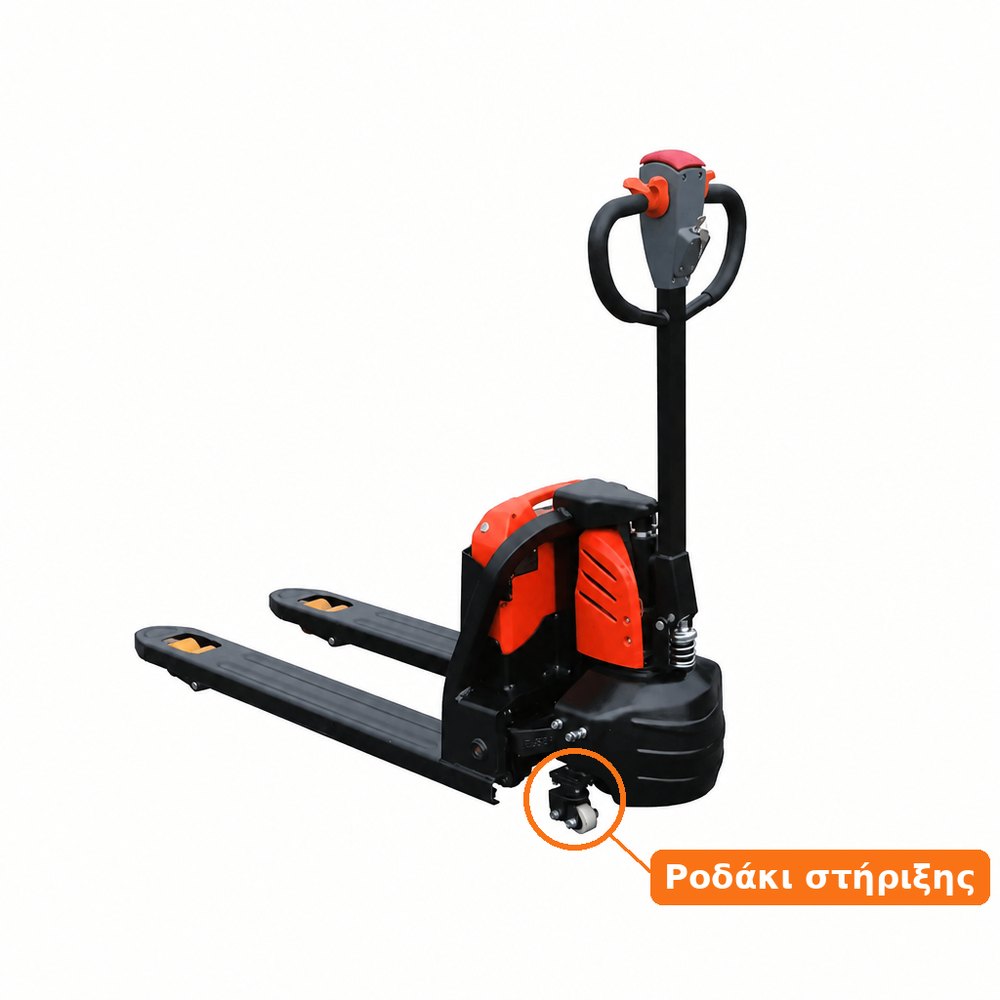
To stop it tipping, the maker adds two small stabiliser castors, one on each side of the drive wheel. They are small and touch the ground all the time.
What potholes do to stabiliser castors
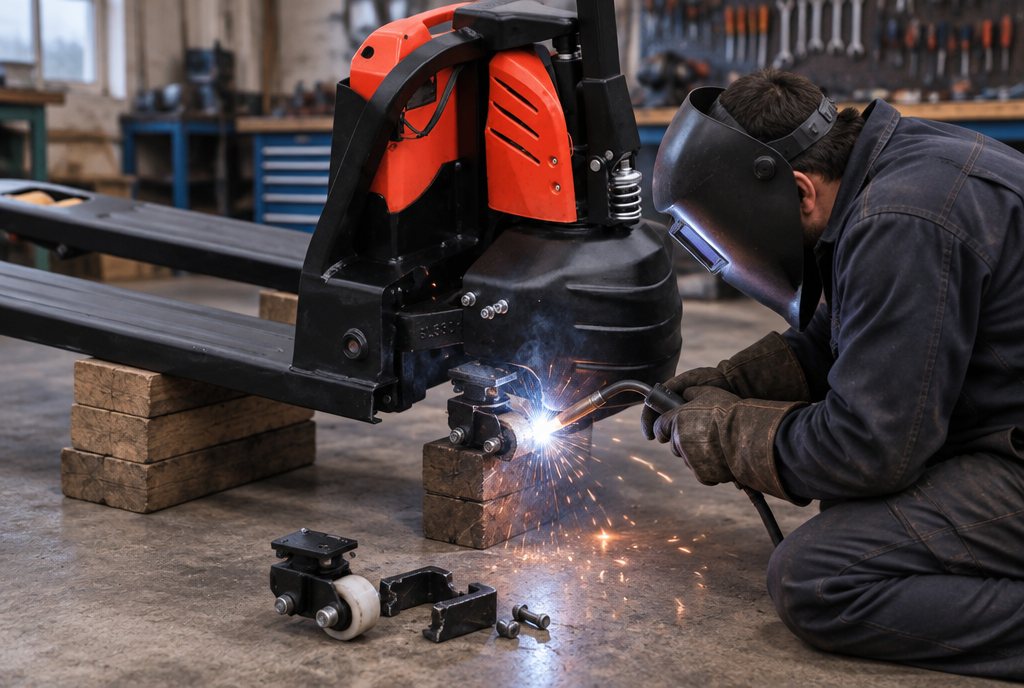
Yards, ramps and access roads in Greece have plenty of potholes. The small castor drops in, catches and takes the whole hit.
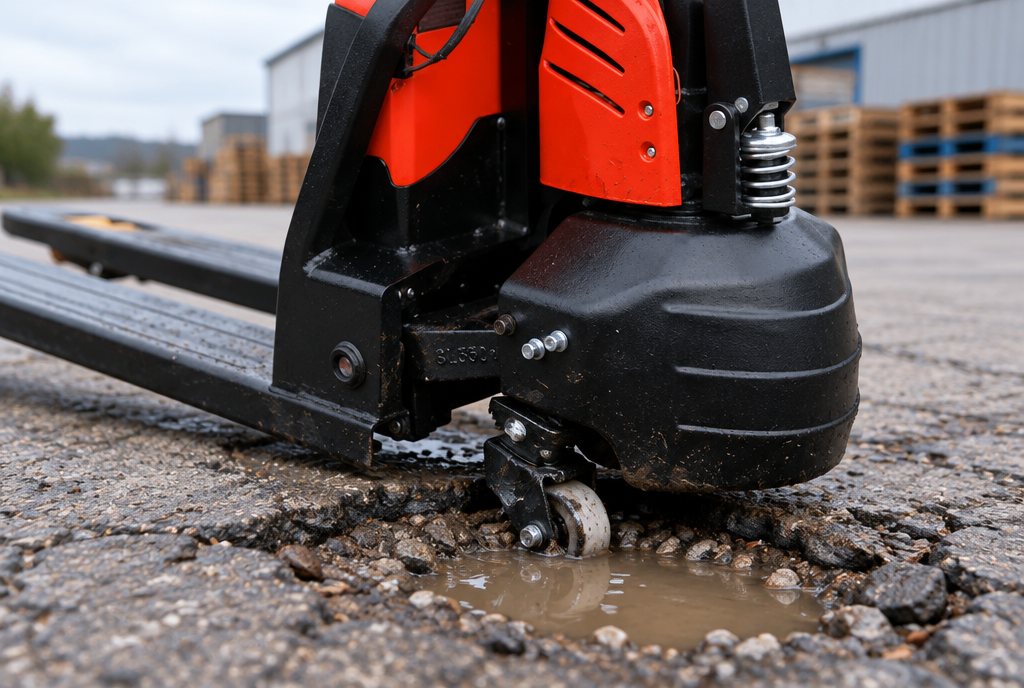
The result: the bracket bends or breaks. The truck leans and doesn't sit right. The fix usually means welding on the bracket: time, cost and a truck out of work. We see it often in our workshop.
How the STAXX 48 V lithium pallet trucks are built
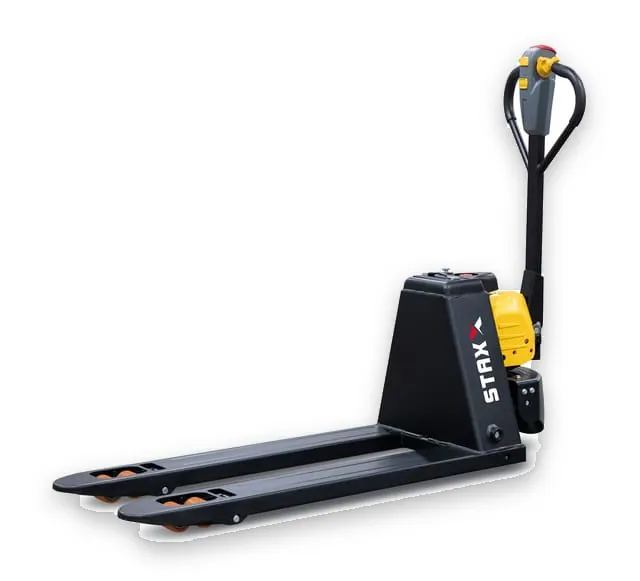
The PPT20H, EPT15H and EPT20H are built around the hand pallet truck layout. STAXX says in its catalogue that they are almost the same size as a hand pallet truck.
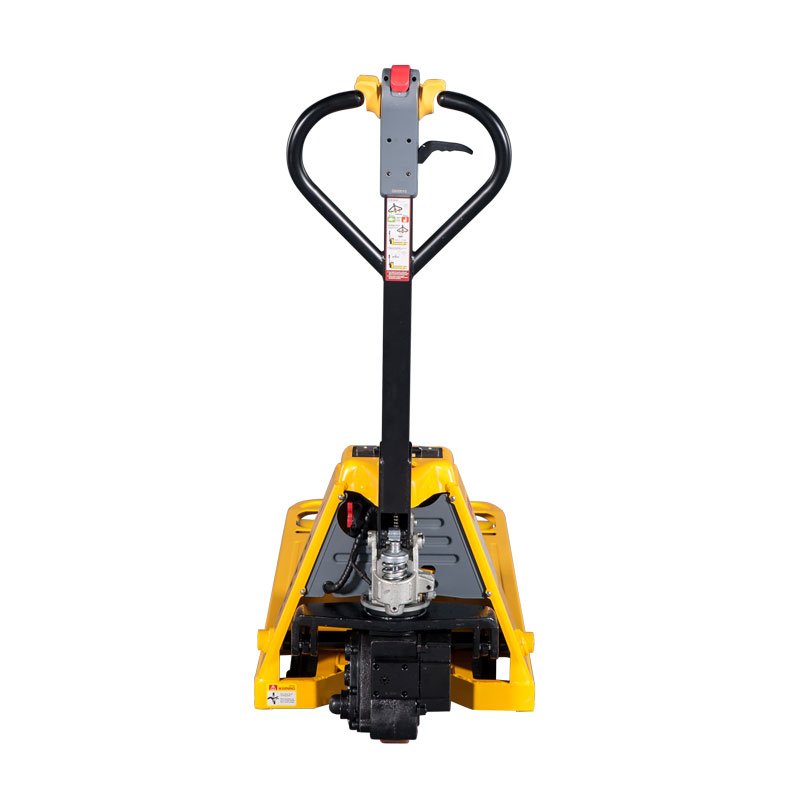
- Small battery: the 48 V lithium battery lifts out by hand in 6 seconds.
- No tall battery box behind the forks.
- No small side castors to catch in potholes.
V, Ah and Wh: what each one means
- Volts (V), the voltage: the “pressure” with which the battery pushes current to the motor.
- Amp-hours (Ah), the capacity: how much current the battery delivers and for how long. A 10 Ah battery theoretically delivers 10 A for one hour.
- Watt-hours (Wh), the energy: volts × amp-hours. This is the truck's real “fuel tank”.
That is why Ah alone is misleading. A 24 V/20 Ah battery looks “twice as big” as a 48 V/10 Ah one, but both hold exactly the same energy: 480 Wh. On the STAXX 24/7 lithium pallet trucks the standard battery is 48 V/10 Ah (480 Wh) and the optional one 48 V/15 Ah (720 Wh), i.e. 50% more energy.
Why 48 V works more “comfortably”
Half the current for the same work. A 1.0 kW drive motor, as on the EPT20H and the PPT20H, theoretically needs about 21 A at 48 V, against about 42 A at 24 V.
A quarter of the losses. Losses in cables and connectors are I² × R. Halve the current and, at the same resistance, the losses fall to a quarter. More of the battery's energy goes into the work and less turns into heat.
Less voltage drop under load. The voltage drop along a cable is I × R. With half the current it is half as large, so the motor sees a voltage closer to nominal where it matters: pulling away with 2 tonnes or on a ramp. According to the catalogue, the STAXX 24/7 trucks climb up to 6% laden and up to 20% unladen.
A small, light battery. Because the same energy needs half the Ah, the 48 V/10 Ah lithium battery is small enough to lift out by hand and swaps in 6 seconds. With a spare, the truck works without stopping.
Analog Devices lists the same benefits for 48 V systems in general: lower current for the same power, smaller I²R losses and thinner conductors.
How much more it is worth in practice
To be precise: 48 V does not double the run time. Working time is set by the battery's Wh and by how the truck is used. In a well-designed truck, cable losses are a small share of total consumption. The value of 48 V shows mainly:
- Under load: steadier performance with a heavy pallet and on slopes.
- In heat: less heat from losses in cables, connectors and the controller.
- In battery size: the same energy in a smaller, removable lithium battery.
To compare two quotes, ask for V and Ah, work out the Wh and see how much energy you get for your money.
When 24 V is the right choice
24 V is not “worse”: it is a different design. Larger machines often use 24 V with much bigger batteries. For example, the WS15H-Li electric stacker has 24 V/60 or 100 Ah (1,440–2,400 Wh) and the heavy-duty RPT25/RPT30 pallet truck 24 V/210–340 Ah. Those machines are designed from the start around that voltage. On compact walk-behind lithium pallet trucks, where a small removable battery and performance under load matter, 48 V has a real advantage.
What to ask before you buy
- Voltage and Ah: work out the Wh (V × Ah) to compare properly.
- Chemistry: lithium or lead-acid? See the lithium vs lead-acid comparison.
- Charging: how many hours and with which charger? On the STAXX 24/7 series, with the optional 5 A charger: about 2 hours for 10 Ah and 3 hours for 15 Ah.
- Battery swap: is it removable? Is there a spare?
- Motor: brushless means less maintenance.
- Service: are spare parts and technicians available locally?
See them in action
Videos from the manufacturer's (STAXX) official YouTube channel.
Machines in this article
See photos, catalogues and CE certificates for each model.
Frequently asked questions
Not necessarily. Run time is shown by watt-hours (Wh = V × Ah). A 48 V/10 Ah battery and a 24 V/20 Ah battery hold the same energy, 480 Wh. 48 V wins on performance under load and lower losses, not automatically on hours.
They are small and touch the ground all the time. In a pothole they drop in and take the whole hit. The bracket bends or breaks and usually needs welding.
Because power = voltage × current. For the same power, double the voltage means half the current. A 1.0 kW motor theoretically needs about 21 A at 48 V and 42 A at 24 V.
The 10 Ah battery holds 480 Wh and the 15 Ah 720 Wh, i.e. 50% more energy. With the optional 5 A charger they charge in about 2 and 3 hours respectively, according to the STAXX catalogue.
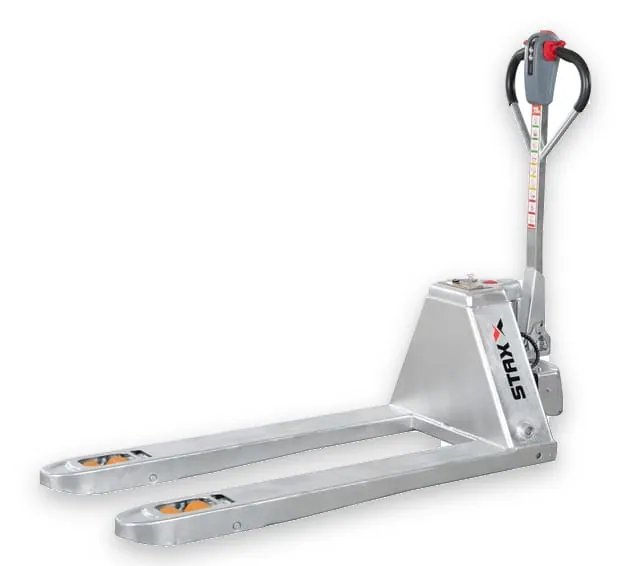
The PPT20H, EPT15H, EPT20H, the B series (EPT15B/EPT20B), the galvanised EPT20H-G and the 75 mm low-profile versions. All of them run on a 48 V lithium battery.
Sources
Read next
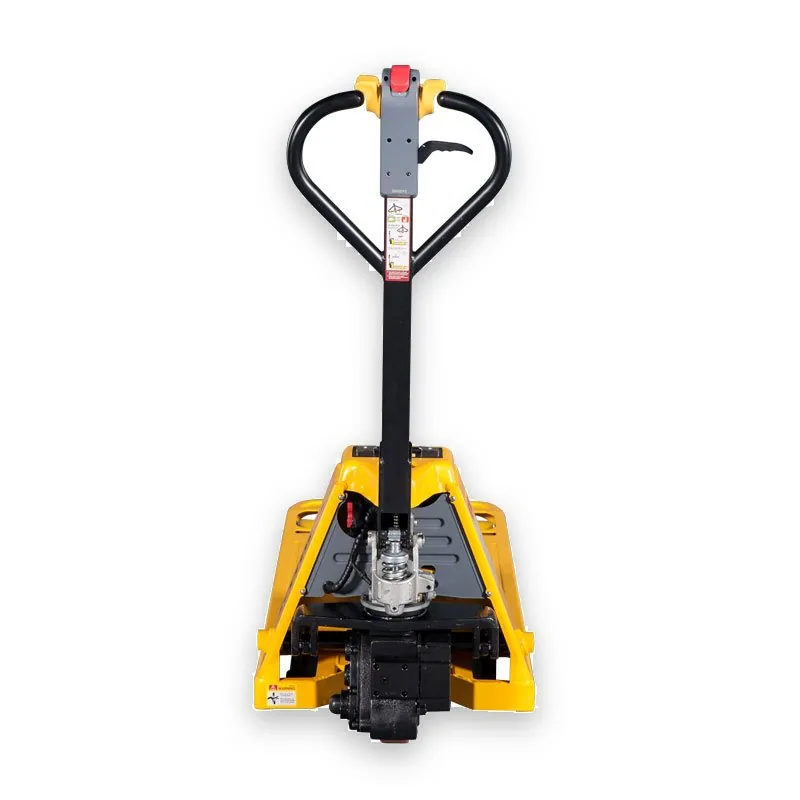
PPT20H, EPT15H or EPT20H: which 48 V lithium pallet truck to choose
Same 48 V lithium battery, different lifting and capacity: how to choose between the PPT20H, EPT15H and EPT20H, and whether you need 10 or 15 Ah.
Read more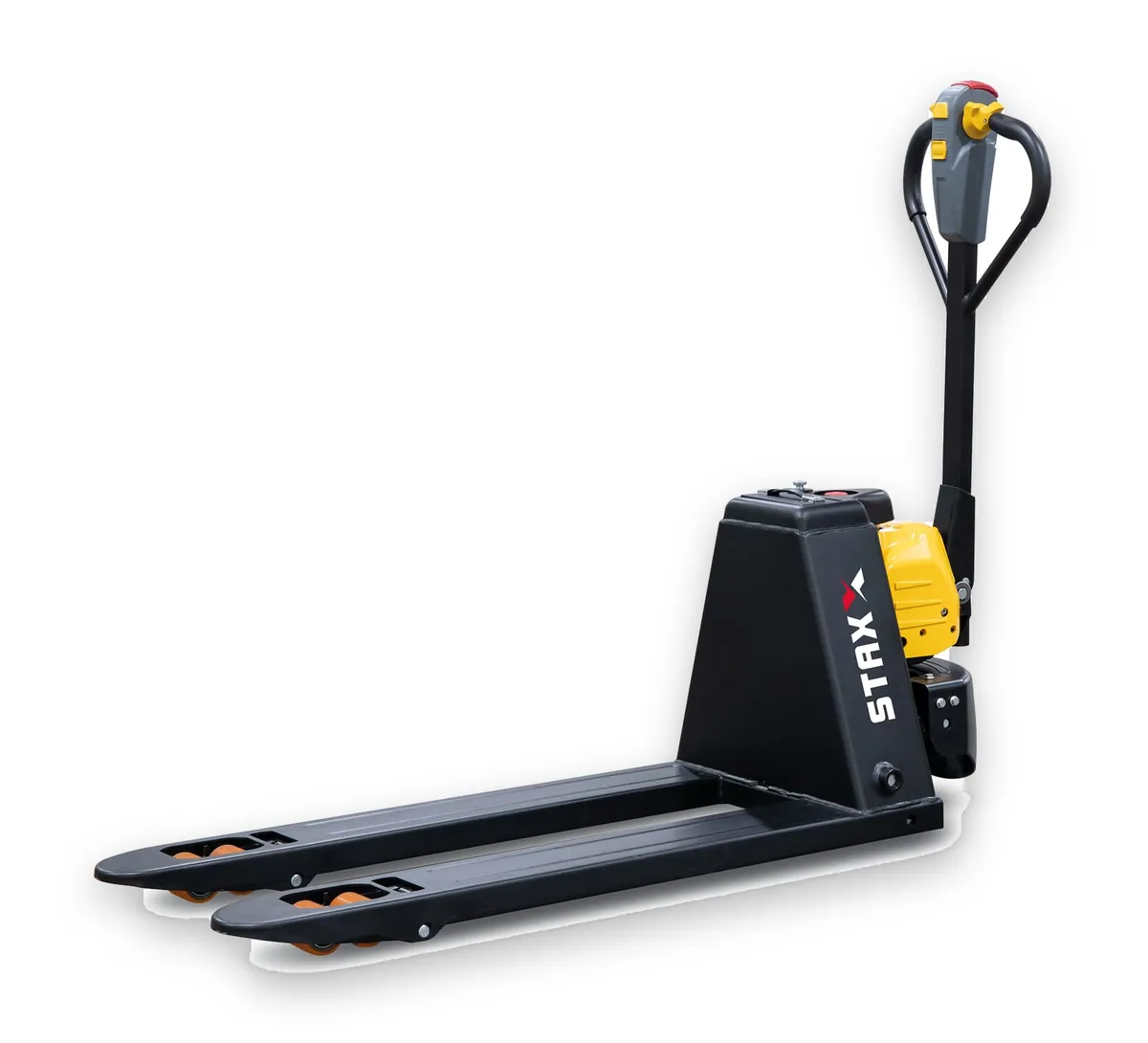
Lithium or lead-acid battery for a pallet truck or stacker?
Cycle life, charging time and charging during breaks: when a lithium battery is worth it and when maintenance-free lead-acid is enough.
Read more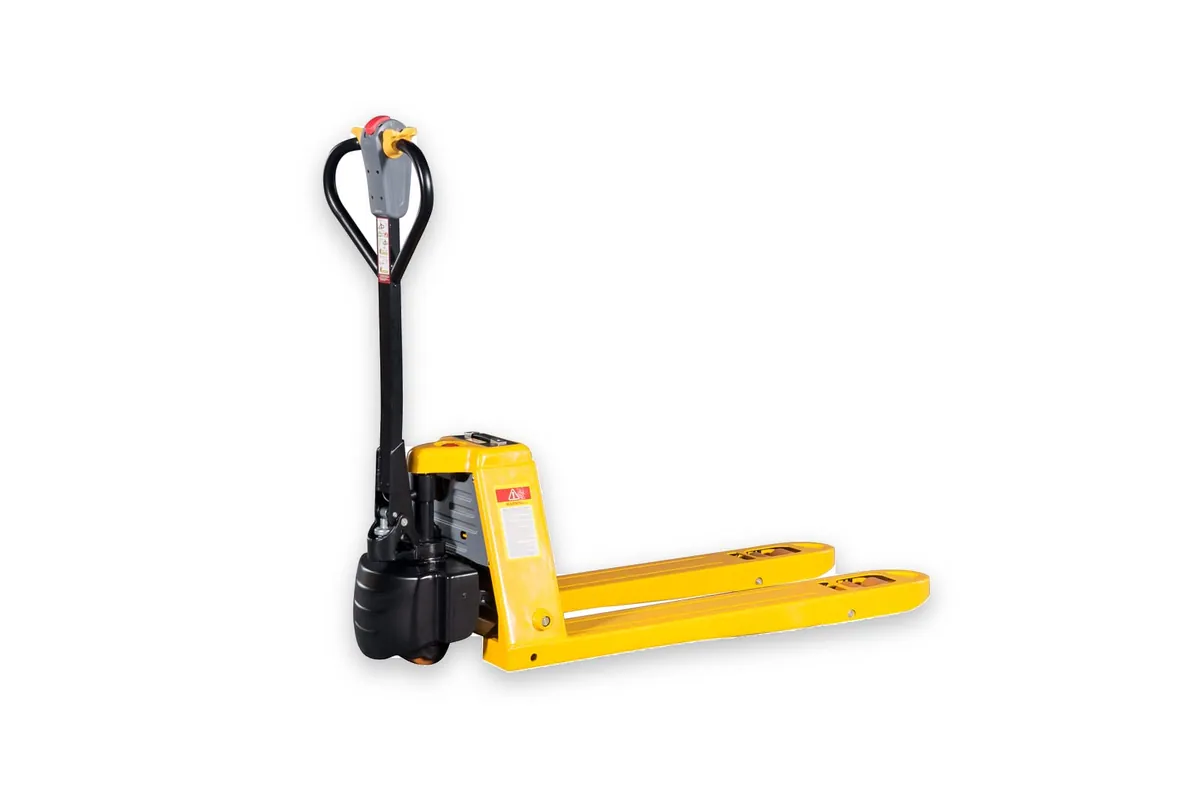
Electric pallet truck: what determines the price and what to look out for
The 6 things that change the price of an electric pallet truck, and how to request a quote that fits the work you do.
Read more