
Comparison
Manual, semi-electric or electric pallet stacker?
Three ways to lift a pallet onto a rack: when manual is enough, when semi-electric pays off and when only electric gets you through the shift.
2 min readAuthor: AIOLOS LIFTS
The short answer
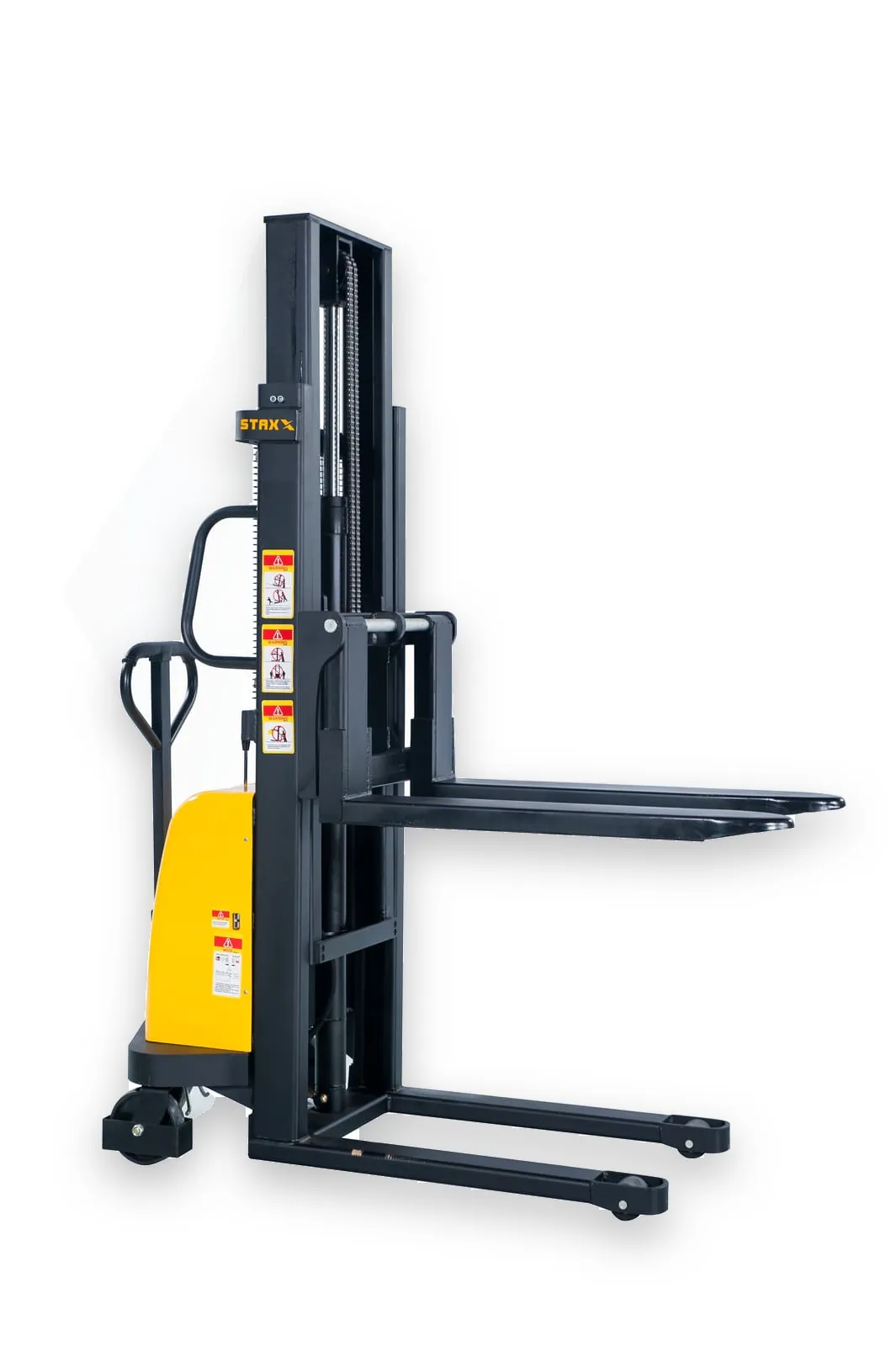
Manual for a few lifts a day and short distances. Semi-electric when you lift often but travel little: the pallet goes up at the push of a button and you push the machine by hand. Electric for daily, continuous work, greater heights (up to 4 m on the STAXX WS15H) and longer distances within the warehouse.
At a glance
| Manual (WMS) | Semi-electric (DYC) | Electric (WS15H) | |
|---|---|---|---|
| Lifting | Hydraulic, by pumping | Electric (12 V, 1.5 kW) | Electric (2.5 kW), proportional |
| Travel | Manual | Manual | Electric, 4 / 4.5 km/h |
| Capacity | 1,000–2,000 kg | 1,000–2,000 kg | 1,500 kg |
| Lift height | 1,600–3,000 mm | 1,600–3,500 mm | 2,000–4,000 mm |
| Battery | None | 12 V / 120 Ah (150 Ah optional) | 24 V / 71 Ah lead-acid or lithium |
| Machine weight | — | 380–480 kg | — |
From the STAXX WMS (2025), DYC (2025) and WS15H (2026.6) catalogues.
Manual: simple and battery-free
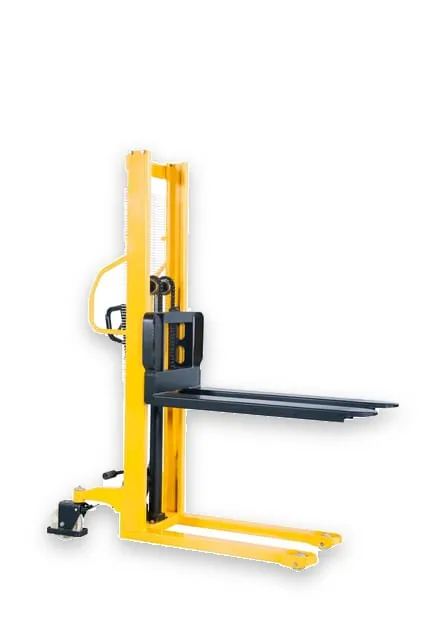
The WMS manual pallet stacker lifts by hydraulic pumping. It has no battery or charger, so it is always ready to go and needs minimal maintenance. It suits shops, workshops and small warehouses that lift a few pallets a day. For light loads there is also the SDJ light-duty manual stacker.
Semi-electric: the motor does the pumping
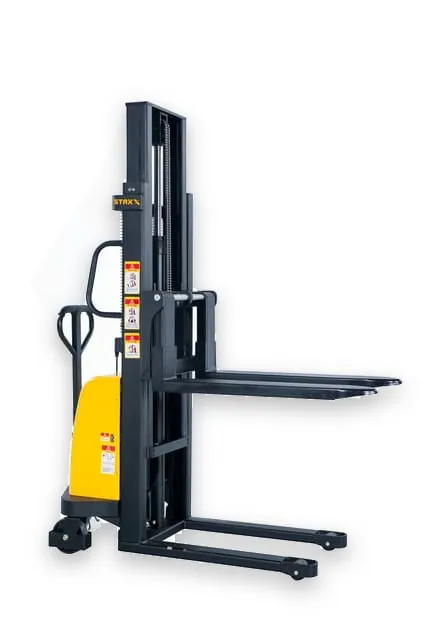
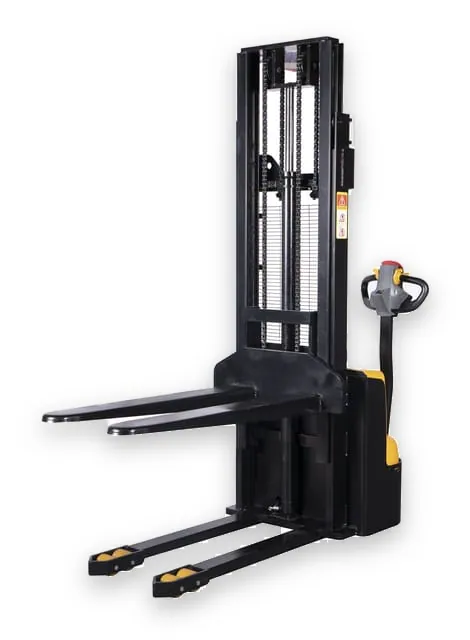
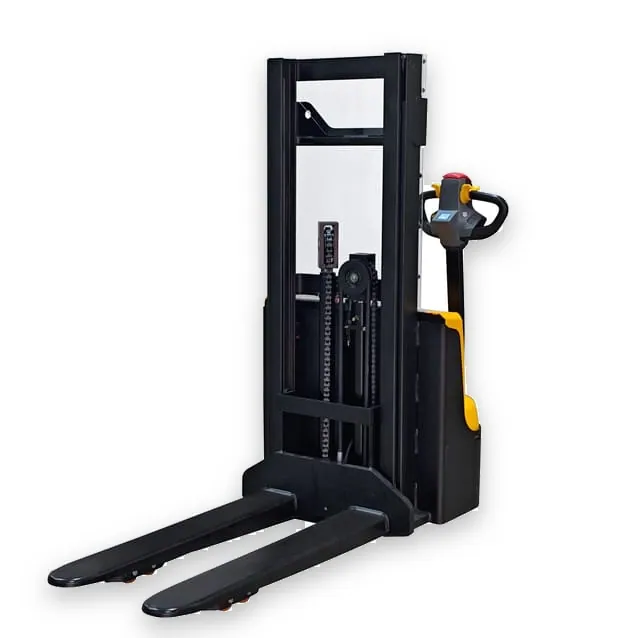
On the DYC semi-electric stacker, lifting is done by a 1.5 kW motor and a 12 V/120 Ah battery, while you move the machine by hand. It is the happy medium when you lift often, to heights of up to 3.5 m, but the runs are short. For closed or non-standard pallets there is the DYC-A version with adjustable-width legs. The Vango self-loading pallet truck is also semi-electric.
Electric: for full shifts and longer distances
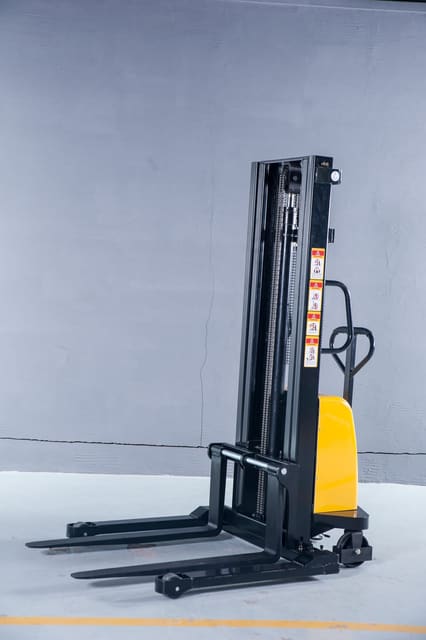
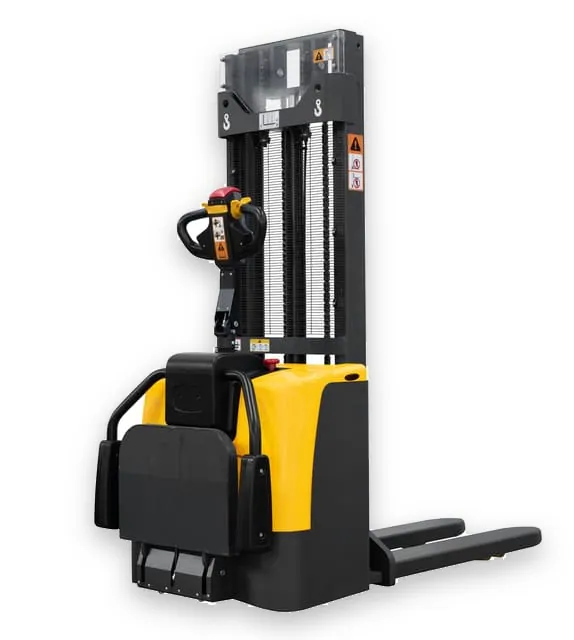
On the WS15H electric stacker, both travel and lifting are electric. Lifting is proportional, with a “tortoise” (creep speed) mode for precise positioning. The catalogue also mentions automatic speed reduction when the forks are raised, for safety. You can choose a lead-acid or lithium battery (the “-Li” version). For special requirements there are versions with free lift, with an operator platform for longer distances, and the heavy-duty ES rated up to 2,000 kg.
A quick rule of thumb
- Few lifts, tight budget, no power at the point of use: manual.
- Many lifts, short distances: semi-electric.
- Daily use by several operators, heights above 3 m, longer distances: electric.
If you are not sure, tell us how many pallets, how high and how far. We will recommend the model that does not make you pay for things you do not need.
See them in action
Videos from the manufacturer's (STAXX) official YouTube channel.
Machines in this article
See photos, catalogues and CE certificates for each model.
Frequently asked questions
It is a stacker with electric lifting and manual travel. On the STAXX DYC, lifting is done by a 1.5 kW motor and a 12 V/120 Ah battery, to heights of up to 3,500 mm.
Of the models covered in this article, the WS15H electric stacker reaches up to 4,000 mm, the DYC semi-electric up to 3,500 mm and the WMS manual up to 3,000 mm.
No. A manual pallet stacker lifts by hydraulic pumping and has no battery.
Sources
Read next
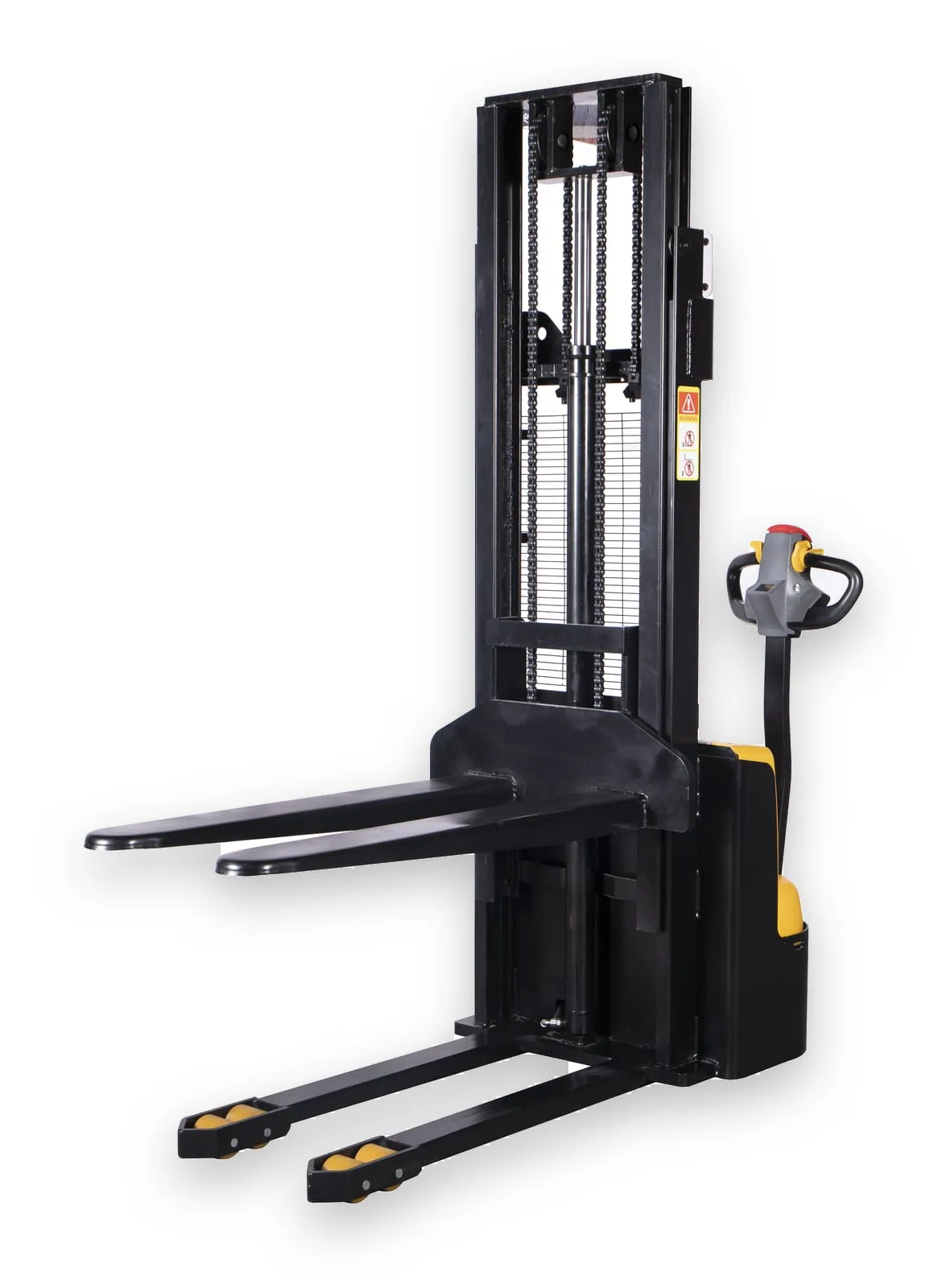
Pallet stacker: what it is and how to choose the right one
Load weight, lift height, pallet type and movements per day: the 5 questions that pick the right stacker for your warehouse.
Read more
Lithium or lead-acid battery for a pallet truck or stacker?
Cycle life, charging time and charging during breaks: when a lithium battery is worth it and when maintenance-free lead-acid is enough.
Read more
Self-loading pallet truck: how it lifts itself onto the truck
The pallet truck that travels with the load: how it gets onto the truck bed without a tail lift, step by step, with STAXX Vango data.
Read more